10 Dec 202518 minute read

10 Dec 202518 minute read
There are three kinds of AI platforms in the world: those with doors bolted shut, those with doors slightly ajar, and those with doors swinging freely with the flurry of fervent footfall. No throttles, no lock-ins, just pure access.
Kilo Code positions itself firmly in the latter category. Launched in March, 2025, Kilo Code is an open source coding agent that can be configured for a range of tasks — from generating new code and refactoring multi-file changes, to debugging, writing documentation, running terminal commands, or orchestrating longer workflows across multiple agents.
With support for VS Code, JetBrains IDEs, Cursor, Windsurf and a standalone CLI, Kilo Code lets developers work wherever they prefer. And because it supports virtually any model a user chooses, it avoids the artificial gating or usage throttles common in more tightly controlled assistants.
Indeed, unlike many coding assistants that are effectively tied to a single model provider, Kilo Code is centered around a model-vendor neutral philosophy. Developers can bring in models from OpenAI, Anthropic, Google, Mistral, Meta’s Llama ecosystem, or their own self-hosted deployments — switching freely as performance, pricing or preference changes.
That focus on developer control doesn’t stop at model choice, either, extending into how the agent itself is built. Kilo’s founding team includes GitLab co-founder and ex-CEO Sid Sijbrandij, who says his intent from the get-go was to build a system whose inner workings were fully visible.
“I was really inspired by the momentum around open source coding agents – it signaled that developers were craving tools they could actually inspect, trust, and extend,” Sijbrandij told AI Native Dev. “That’s what pushed me to build Kilo Code as an open source, all-in-one coding agent.”
To zoom out just a little, AI coding tools have exploded these past couple of years, morphing from smart autocomplete widgets into full-blown assistants that promise everything from bug fixes to multi-file refactors. The landscape is dominated by a handful of heavyweights: GitHub Copilot, the default for many developers; Cursor, a VC-fuelled juggernaut pushing a tightly integrated, closed-stack model; Claude Code, Anthropic’s terminal-first agent built around deep codebase awareness; and newcomers like Windsurf (recently acquired by Cognition) and Replit, each promising deeper hooks into proprietary models.
Most of these platforms fall into two broad camps: the closed, single-model assistants tied tightly to one provider, and the convenience-first tools that wrap proprietary models in polished interfaces with an implicit degree of lock-in. But alongside these sit a growing open source cohort — tools like Continue, Tabby, Cline, and Roo Code, which prioritise transparency, self-hosting and model choice, to varying degrees.
Kilo Code, which is forked from Roo Code, positions itself somewhere in between these worlds: open source at its core, but with ambitions that put it closer to the agentic heavyweights than to the usual self-hosted Copilot alternatives.
“Our biggest differentiator is that Kilo isn’t just another plugin or assistant – it’s a full, all-in-one coding agent built to actually do end-to-end work with you,” Sijbrandij explained. “A lot of the open source tools out there focus on one slice of the workflow, but we’re aiming to give developers a single, transparent agent that can explain, architect, plan, code, test, debug, review, and deploy in a way that feels cohesive. And because we’re a fully open platform, teams have the freedom to use Kilo the way that works best for them instead of being boxed into someone else’s workflow or business model.”
Kilo breaks this end-to-end workflow into a set of distinct modes — each one tuned to a different stage of the development process, adapting its behaviour to match the task at hand.
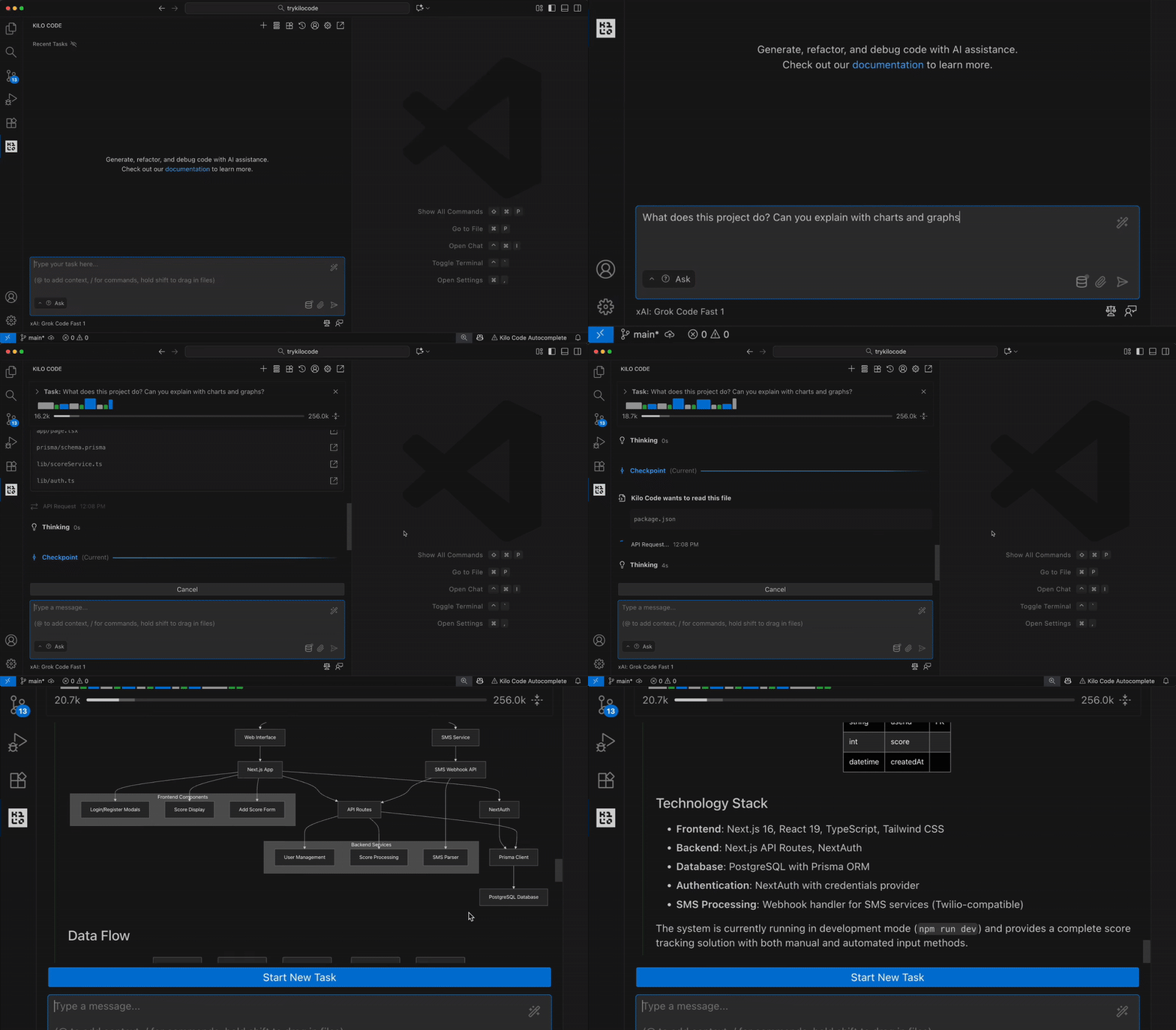
Ask, for example, is a general-purpose mode for questions, explanations, documentation, and ad-hoc guidance — the conversational layer developers use most often.
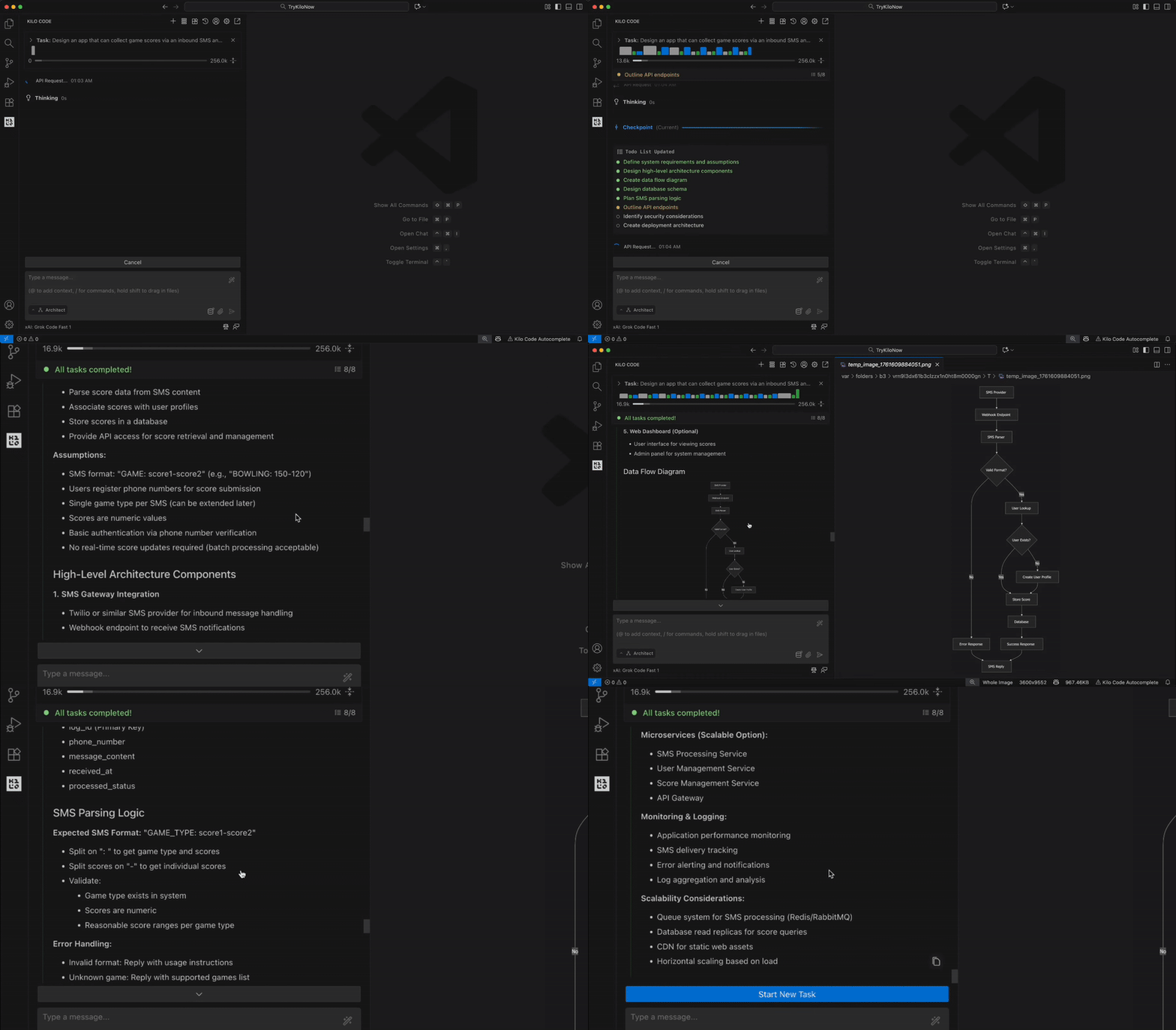
Architect mode, meanwhile, is all about structured plans, outlining system designs, and breaking complex requests into actionable steps before any code is written.
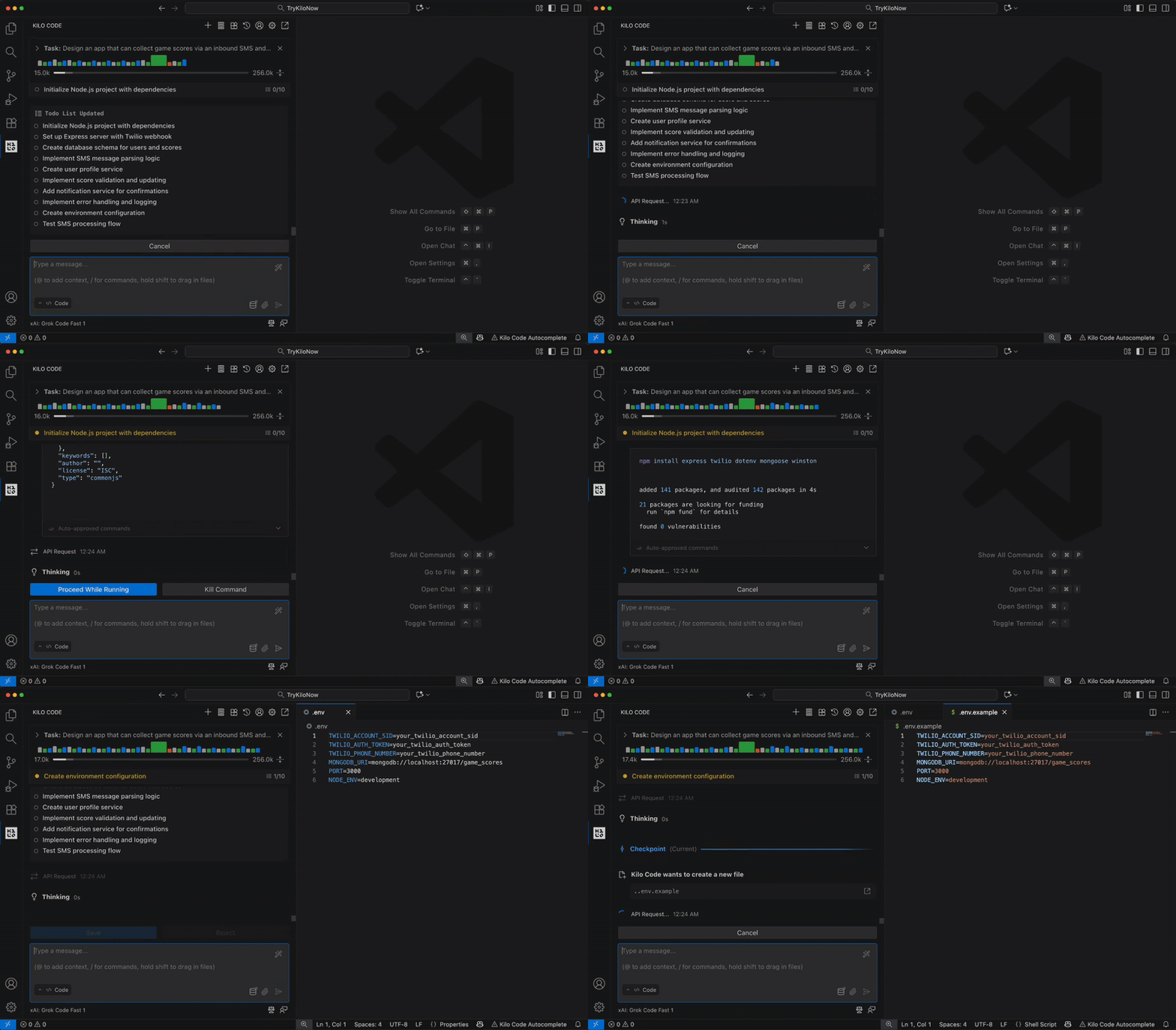
In code mode, Kilo handles multi-file code generation and refactoring, writing or updating files directly in the workspace.
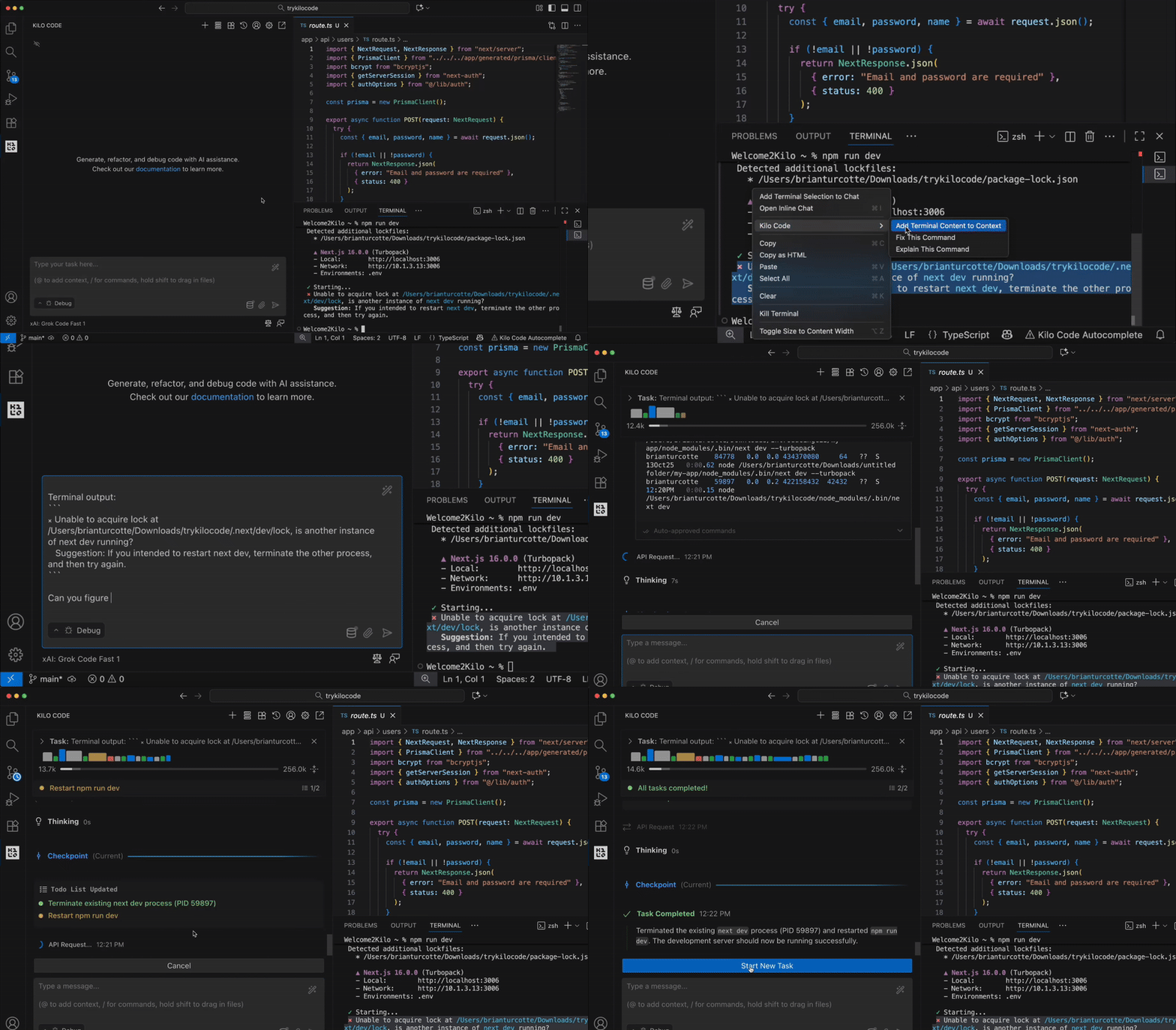
The debug workspace is all about diagnosing and resolving errors — running commands, inspecting output, and iterating on fixes until the issue is resolved.
And in orchestration mode, Kilo coordinates multi-step workflows across modes — planning, coding, validating, and updating files in a controlled sequence.
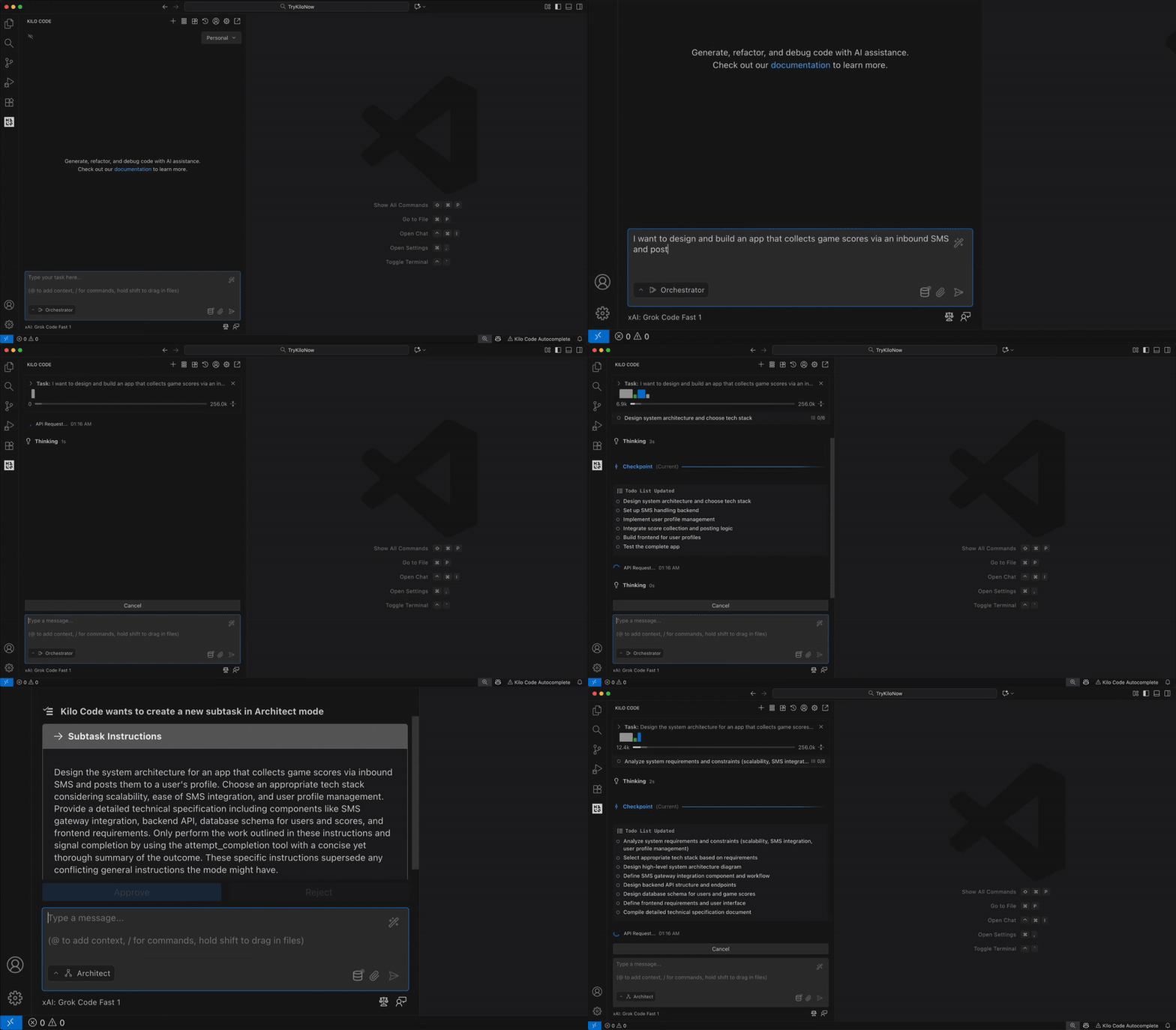
Collectively, these modes form the backbone of Kilo — a single agent built to plan, build, debug and coordinate without forcing developers into someone else’s stack. However, these distinct modes serve a deeper, strategic purpose: they help Kilo manage context, ensuring the agent stays focused rather than being overloaded.
By separating planning from coding, and coding from debugging, Kilo limits the amount of information each step must juggle, keeping prompts clean and the model’s attention anchored to the task at hand.
This context-management layer determines what information the agent sees and how it applies the prompts that drive each mode. Under the hood, Kilo uses several systems to support this. Its automatic context search, for example, scans the project to pull in only the files or error traces that are relevant to the task at hand, rather than flooding the model with the entire codebase. Context Mentions, meanwhile, gives developers explicit control over what should be prioritised, letting them point the agent toward specific files, functions, or details without manually pasting large snippets.
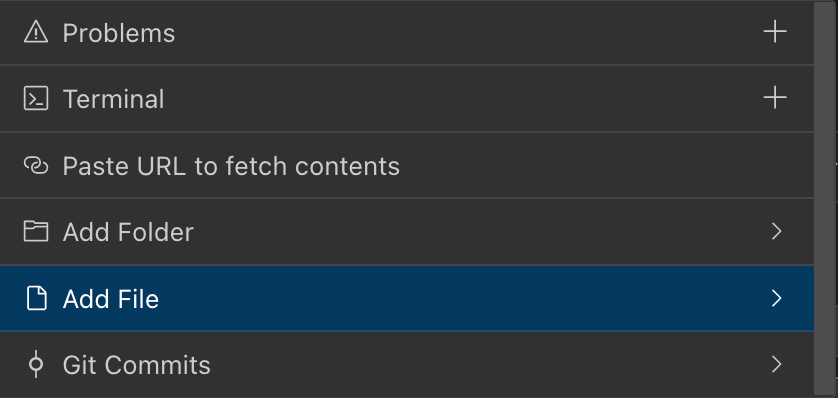
And for work that stretches across days or weeks, Memory Bank promises durable, project-level recall — storing architectural decisions, conventions, or historical notes so the agent doesn’t need to be re-briefed every session.
It does this through a small set of structured markdown files, which are stored inside a .kilocode/rules/memory-bank directory. These files are created and maintained by the developer, and Kilo is designed to use them as part of its reasoning loop. Developers document their project’s architecture and technologies in context.md, outline active goals or tasks in brief.md, and record past decisions or constraints in history.md. Kilo then reads and synthesises this material automatically at the start of every task, rebuilding its understanding without manual re-briefing — effectively turning long-term project knowledge into a first-class input to the agent.

Back in March, Kilo Code surfaced the way many open source projects do: quickly, collaboratively, and with a sense that something in the ecosystem wasn’t quite keeping pace. That ethos spilled onto the page of a blog post written by founding CEO Jan Paul Posma, who framed the launch as a field note from inside a fast-moving experiment. Posma described pulling together the first version in a matter of weeks, forking Roo Code, and assembling a team practically overnight. It’s also where the company’s name starts to make sense, with Posma noting that the future of coding wasn’t artisanal or hand-tooled. It was heading toward bulk production — something generated in volume, the way everyday staples like rice or potatoes are portioned out by weight.
“Gone are the days of thinking of code directly – AI agents will produce code ‘by the kilo’,” Posma wrote. “Enter: Kilo Code.”
Those early weeks set the tone, and that pace remained well in place by the time Scott Breitenother joined as CEO in September, stepping in after Posma took a leave of absence for personal reasons. And internally, that tempo already had a name: “Kilo speed.”
“I describe it as this parallel universe where the laws of time and gravity don't apply, and you move so fast you're not held back,” Breitenother explained to AI Native Dev.
That pace is visible in the company’s public roadmap, which at the time of publishing includes an app builder, parallel agents inside the IDE, JetBrains autocomplete, and more. “In most places, that public roadmap would probably be 12 to 18 months,” Breitenother said. “That's our roadmap for the next five weeks.”
Case in point: AI Native Dev in fact had to update the roadmap examples above before publication. Three of the features originally listed as “upcoming” — Kilo Deploy, Code Reviews, and Cloud Agents — were shipped in the week leading up to press time.
That high-velocity culture has also spilled outward, shaping how the community has formed around the project. According to its public GitHub repo, Kilo Code has attracted significant community interest, with well over a thousand forks and some 13,000 stars, signalling sustained engagement from contributors and users alike.
Breitenother says that this momentum is being reinforced from two sides: from some of the model providers experimenting on one end, to an increasingly active developer community on the other.
“We've worked really hard to build close relationships with the top and emerging foundation labs,” Breitenother told AI Native Dev. “Because our goal is to be the best place to run every single model out there. Then we have this group of really passionate folks on Discord and Reddit – community members that, when they see an issue, we say ‘submit a pull request.’ And that's worked pretty well.”
Just last week, Kilo announced a tie-up with French frontier AI lab Mistral AI, involving a stealth launch of a new code-focused model dubbed Spectre. The Kilo community received early access and stress-tested the model, with Mistral since releasing two open weights models derived from that experiment, Devstral 2 and Devstral Small 2. For Breitenother, the collaboration is a proof point of Kilo’s model-vendor-neutral philosophy in action — and of what happens when an open source agent moves fast enough to test frontier models in real workflows.
“It was one of our most successful stealth launches yet, surpassing 17B tokens used by our community in the first 24 hours alone,” Breitenother wrote on social media.
With a growing community, the question becomes how Kilo sustains the product as it scales. In line with how many commercial open source software companies operate, Kilo follows an open core model: the agent itself is free, while organisational features are packaged into paid tiers.
In the free plan, users pay only for the model tokens they consume, either via built-in provider credits at cost or by bringing their own API keys. The company monetizes through Team and Enterprise plans, starting at $15 per user per month, which include features such as centralised billing, a team dashboard, usage analytics, shared modes, role-based permissions and audit logs, along with other collaboration and governance capabilities intended for larger organisations.
Breitenother had already ridden one wave in his career. Before launching Kilo Code, he’d founded Brooklyn Data Co., a consultancy that grew from a one-person shop into a hundred-person firm before being acquired by digital agency Velir in 2023. After seeing that transition through, he stepped back — only to feel a familiar spark returning with Kilo Code. It was the same early-wave energy he remembered from the rise of the modern data stack. “I hadn’t felt that kind of spark since the beginning of when I started my last company,” he said. “It felt like what it must have felt like to be in the hacker clubs with Steve Jobs in the 70s. And now it’s an opportunity to be part of this AI moment, which is arguably 100 times bigger.”
Sijbrandij, meanwhile, stepped down as GitLab CEO in December, 2024, remaining executive chair while continuing to work on Open Core Ventures, the firm he founded to turn open source projects into full-fledged companies. Kilo Code, born from an open source foundation, fits squarely within that philosophy. Inside the company, Sijbrandij acts as something between product visionary and strategic architect — someone Breitenother describes as “sprinkling his genius everywhere,” even while technically working part-time. “He says he's working part-time, but there are messages and thoughts and ideas that come out 24/7,” Breitenother said. “His definition of part-time, and a normal human’s definition of part-time, is very different.”
That constant stream of ideas helped define Kilo Code’s central belief: an AI development tool only matters if it can withstand the chaos of real software production. It's not enough for agents to generate neat proofs of concept; they need to handle the messy realities of multi-file changes, long-running workflows, and ongoing maintenance — the things that break most AI coding demos. If Kilo is riding the crest of a new AI wave, then its credibility hinges on proving its tools in the harshest environment available: its own.
“We say the proof is in production — we are using Kilo Code to write Kilo Code,” Breitenother said, adding that the company is committed to dogfooding across its entire operation. Agents handle everything from new features to testing pipelines to developing the company website. “We have no front-end developers working on our website,” he added. “Our marketers vibe-code every aspect of it.”
This ethos feeds a broader conviction about how developers’ roles are changing. AI isn’t replacing engineers, Breitenother argues, but shifting their work toward orchestration. “You're not going to have 50 engineers — you're going to have 20, and they’re each going to have a team of agents,” he said. “We're not replacing people with robots; we’re making people cyborgs.”
Kilo Code today is a fully remote, 30-person company spread across North America and Europe, with coworking hubs in Amsterdam and San Francisco. And while the company may have started with Sijbrandij’s capital and an open source foundation, Breitenother is clear that the ambition extends much further. “Although Kilo might have started as a passion project, our goal is to build a venture-scale business and a large technology company,” he said.
And it's against that backdrop that Kilo Code today announced it has raised $8 million in seed funding, a round the company says will help scale its platform into real business workflows.
"This funding accelerates our roadmap: smarter multi-agent collaboration, enterprise-grade tooling for technical leaders, and a feature set that continues to accelerate the AI flywheel for development teams using Kilo," Breitenother said.

25 Apr 2025

8 Sept 2025

9 Dec 2025

24 Nov 2025