Cursor, the AI-assisted code editor and development platform from Anysphere, has announced plans to acquire Graphite, a New York-based startup that builds tools to help developers review and merge code changes.
The deal brings together two parts of the software development lifecycle that have historically been treated separately: writing code, then inspecting it before it’s merged into production.
The announcement comes shortly after Graphite closed a $52 million funding round. As well as the usual institutional investors such as Accel, the raise also included corporate participation from Anthropic via its Anthology Fund, as well as the venture arms of Figma and Shopify, both of which are Graphite customers.
Cursor, for its part, is also fresh off a heftier $2.3 billion funding round, valuing the four-year-old company at $29.3 billion – a war chest that is beginning to shape the company’s broader ambitions.
Founded back in 2020, Graphite is a platform that developers use to examine changes to software, catch issues, and coordinate approvals among team members — a process we all know as code review.
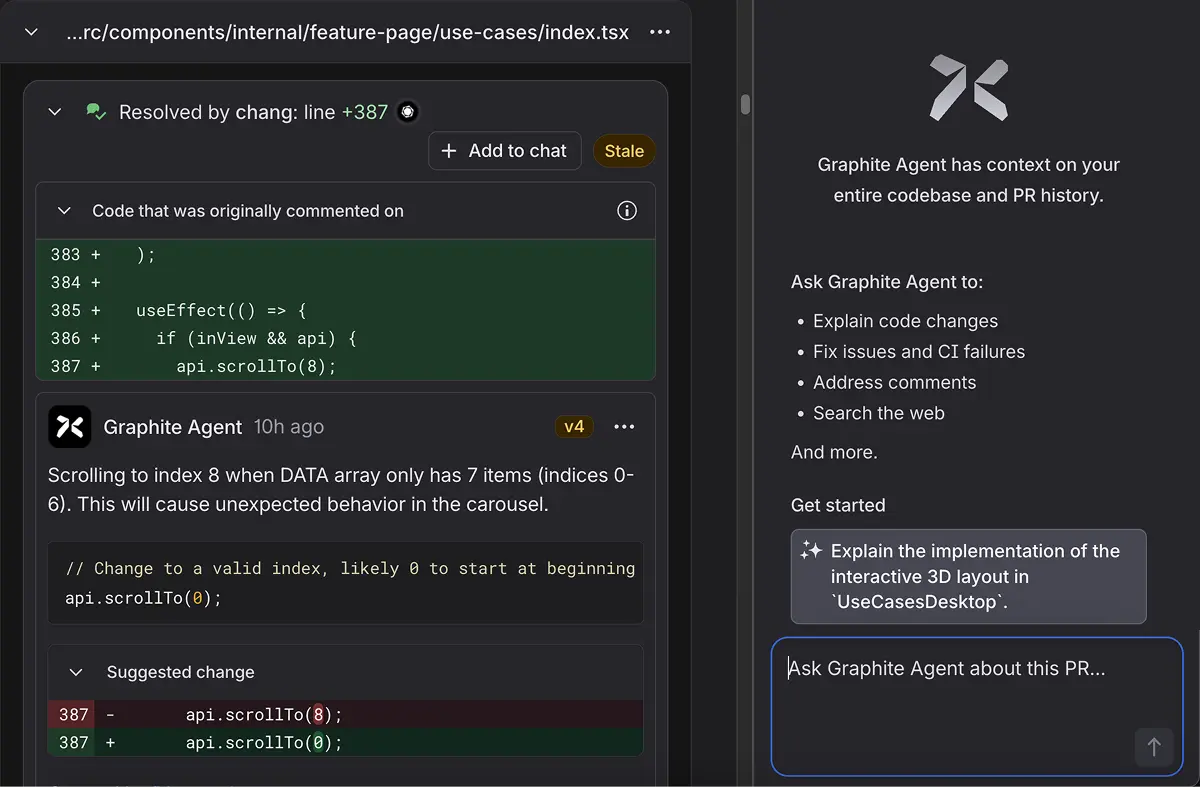
As Graphite co-founder and CEO Merrill Lutsky confirmed on LinkedIn, the deal with Cursor is intended to bring Graphite’s review tooling closer to where code is written and discussed, with plans to keep the existing product and team intact under Cursor’s ownership.
“We’ve long dreamed of connecting the surfaces where we create, collaborate on, and validate code changes, and this deal brings that ambition to life,” Lutsky wrote. “Graphite's product and brand aren't going anywhere, and the entire team is joining Cursor to continue our work with far greater resources.”
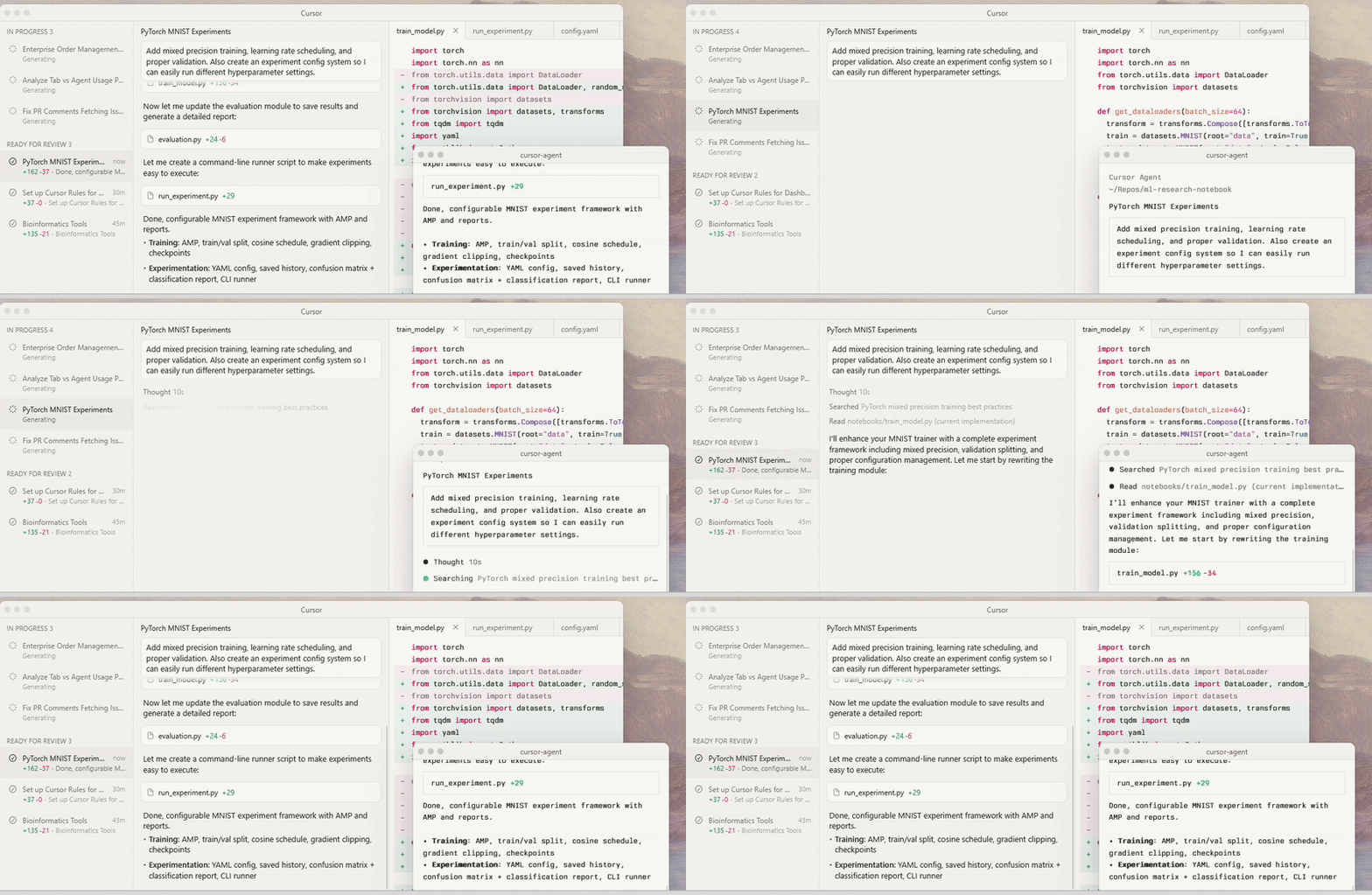
In its announcement, Cursor said reviewing, merging, and collaborating on code has become a growing constraint for engineering organisations as code generation accelerates. Connecting review tools like Graphite more closely with coding tools promises a smoother end-to-end experience for developers.
“Over the coming months, we'll explore connecting the two products in ways that we hope will feel natural: tighter integrations between local development and pull requests, smarter code review that learns from both systems, and some more radical ideas we can't share just yet,” the company wrote.
For context, Cursor is an AI-centric code editor that lets developers write, edit, and navigate code with natural language and AI guidance.
Graphite, meanwhile, has built a staunch following among engineering teams that need to manage complex reviews and maintain quality as teams ship changes. Its platform integrates with standard version control systems and provides tools for organising review work and tracking pending changes.
This includes support for stacked changes, a workflow where larger pieces of work are broken into a sequence of smaller, dependent updates — which can be reviewed as stacked diffs and managed through multiple linked pull requests. This allows teams to review and merge work incrementally, without waiting for each step to be approved before starting the next.
The acquisition reflects how the lines between tools for generating code and tools for checking it have started to converge. With more code being produced via AI guidance, teams are looking for equally sophisticated ways to guard against bugs, security issues, and merge conflicts early in the process.
Notably, the deal also nudges Cursor closer to territory long dominated by GitHub, which has historically combined code hosting, pull requests, and review as a single coordination layer. That positioning has been echoed by Gergely Orosz, AKA author of The Pragmatic Engineer, who also happens to be an investor in Graphite.
“I'm telling you: GitHub's biggest competitor could soon be Cursor,” he wrote on LinkedIn. “Graphite — in my view — is the best AI code review \+ stacked diffs \+ PR workflow product out there. GitHub is already playing catchup to Cursor/Graphite: they will be adding stacked diffs in 2026, years after Graphite has polished this.”
For now, the deal is perhaps less about competing directly with GitHub, than it is about trajectory. Cursor’s bet is that tighter control over review and coordination will matter as much as code generation itself in what is becoming an AI-heavy development stack.