4 Dec 20256 minute read

4 Dec 20256 minute read
GitHub is opening up its context system with the launch of public Spaces in Copilot, a shift that moves the feature from a private project aide into something that can be shared, circulated, and referenced outside a team.
The Microsoft subsidiary launched Copilot Spaces into general availability back in September, as a way to gather code, docs, issues, and other project signals into a single context hub for Copilot. At the time, GitHub enabled sharing only within an organisation, keeping Spaces as an internal knowledge layer.
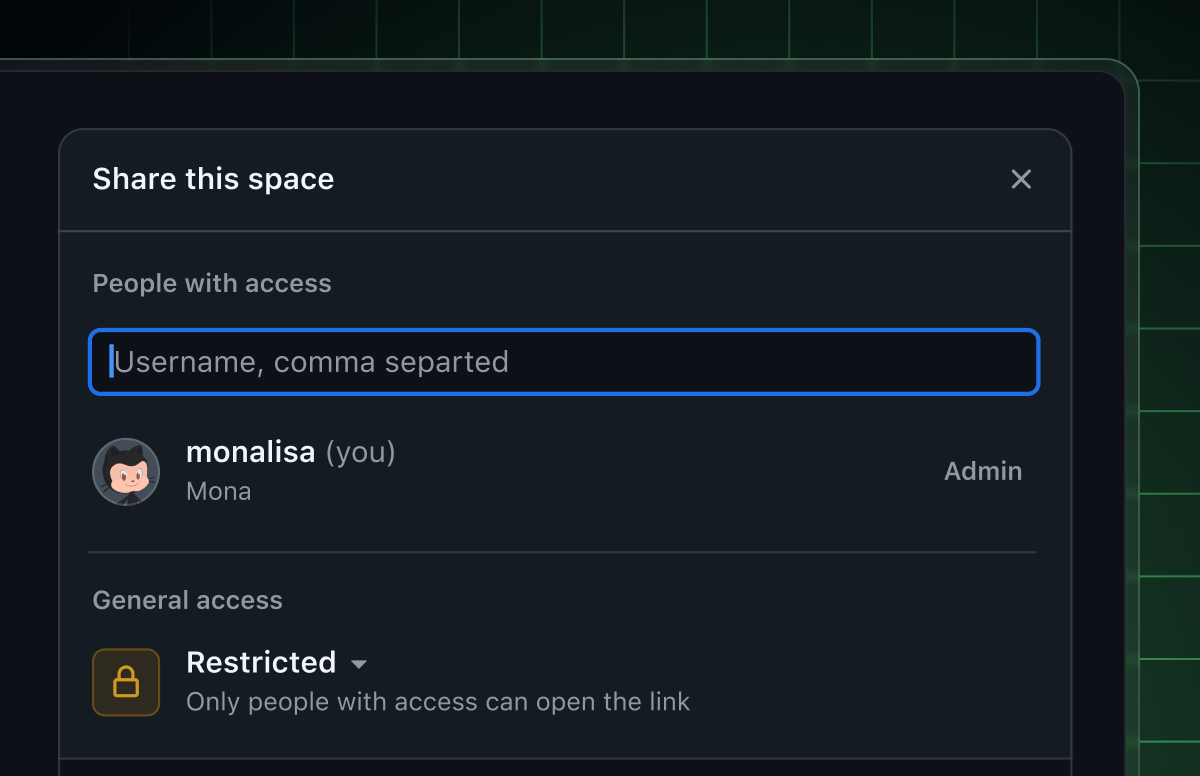
But with the launch of Public Spaces, that boundary opens up: context can now be shared outside the organisation, turning Spaces into something that can be circulated more widely..
Additionally, GitHub is introducing individual sharing, letting a Space be granted to specific people across organisational lines — a quieter but meaningful shift that makes Spaces usable in cross-company work, contractor setups, and any project where collaborators don’t live under the same GitHub umbrella.
It’s worth noting that Public Spaces are read-only, avoiding the overhead of yet another writable surface while still giving people a clear view of how a project is structured. For many teams, that’s sufficient: the context is visible, but the project stays protected, and AI-native workflows get a stable reference point they can reliably point agents at.
Spaces, more broadly, addresses a common problem: Copilot (and coding agents in general) write better code when they know the surroundings, but most surroundings are scattered — README fragments, issues, snippets in chat, tribal knowledge.
A Space lets developers pin the essentials into a single container so Copilot can stay anchored. Code files, issues, design notes, diagrams — whatever shapes how a project works. They started as internal tools for context discipline, but with public sharing, GitHub is nudging Spaces into a position closer to documentation, or even a lightweight social artifact.
If this sounds familiar, that’s because we’re seeing a wider pattern. Back in November, Amp launched public developer profiles hinged on the same idea: technical work becomes more legible and more collaborative when it’s visible. Public Copilot Spaces play in a similar patch of land – it’s not quite the same thing as profiles, but it does add a layer of context transparency that sits above the code.
In practice, a public Space can act like a curated explainer for a project. Instead of pointing newcomers at a directory tree and wishing them luck, maintainers can hand over a Space that captures the mental model. It’s not far off from the early ideals of social coding: making the invisible parts of software visible enough that others can join in without friction.
GitHub’s move also brushes up against a broader question: who should own the context that modern coding agents rely on? As more of the development process shifts toward AI-assisted workflows, the value isn’t just in the models but in the structured knowledge they’re fed. That raises the issue of whether context platforms should sit inside a single vendor’s ecosystem or exist as portable layers that different agents can use.
Spaces, for now, live entirely within GitHub’s environment. Public links widen their audience but not their portability; a Space can be viewed broadly, but it can’t yet move with a developer across tools or agent providers. Even so, the move toward sharing suggests that context itself is becoming a surface worth standardising, not just an internal ingredient in Copilot’s responses.
Other companies are exploring similar territory. Tessl, an AI-native development platform (and sponsor of AI Native Dev), is building cross-agent context infrastructure — reusable packets of project knowledge designed to work across different assistants rather than being locked to one. This kind of approach hints at a future where context is a shared asset developers carry with them.
With Public Spaces, GitHub acknowledges that documentation alone doesn’t carry enough of a project’s texture for agents — and often not for humans either.
If GitHub follows the trend line, discovery, remixing, and cross-project reuse may be next. If it doesn’t, other platforms could step up. Shared context is becoming part of the social layer of coding, and GitHub is inching toward that reality, even if the walls aren’t fully open yet.