GitHub has begun rolling out a new memory feature for Copilot, giving its AI coding assistant the ability to retain repository-level context over time. The feature is now available in early access for users on Copilot Pro and Pro+ plans, and marks the first time GitHub has introduced an explicit, persistent memory system inside Copilot.
Copilot is GitHub’s AI-powered coding assistant, designed to help developers write, review, and understand code directly within editors and GitHub’s web interface. Until now, Copilot’s suggestions were driven primarily by short-term context, such as the contents of the current file, nearby code, and recent edits within a session.
The new memory feature extends that model by allowing Copilot to build and reuse repository-level context across interactions, rather than starting fresh each time.
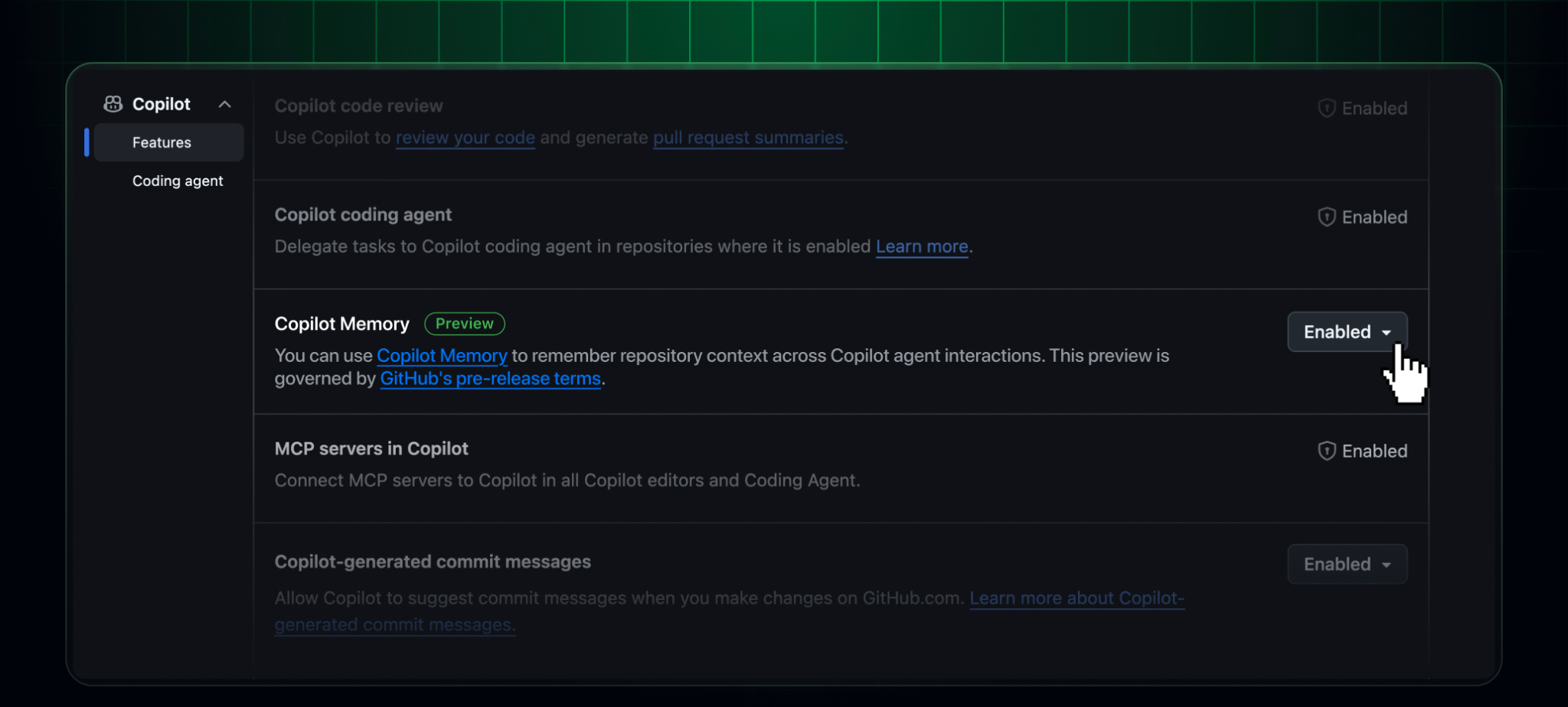
GitHub describes Copilot memory as a way for the assistant to retain useful information about a codebase. Over time, Copilot can draw on that accumulated context when generating suggestions or participating in code review, without requiring developers to restate the same information in each session.
In early access, Copilot memory applies to both the Copilot coding agent and Copilot code review, allowing the assistant to reference prior understanding when moving between changes, pull requests, and edits.
GitHub’s move builds on earlier work across Microsoft’s Copilot ecosystem. Back in July, Microsoft introduced Copilot Memory for Microsoft 365 Copilot, designed to retain user preferences, working patterns, and recurring topics across tools such as Word, Outlook, and Teams.
While the Microsoft 365 version of Copilot memory focuses on personal productivity and collaboration, GitHub’s implementation adapts the concept to software development, where continuity is often tied to codebases rather than individual users. The appearance of memory inside GitHub Copilot signals an effort to bring longer-running context into developer workflows, where projects may span months or years.
For developers, persistent memory could reduce the need to repeatedly explain project structure, conventions, or recurring issues when working with Copilot. In code review, memory may help Copilot surface patterns or considerations that apply across multiple pull requests, rather than treating each review in isolation.
Early reactions suggest those benefits are beginning to appear, though not without friction. One user experimenting with Copilot memory reported that it helps maintain continuity in straightforward interactions, but can become harder to reason about when goals shift mid-task. The same user also noted that it’s difficult to fully assess the feature without visibility into what Copilot is actually retaining between sessions.

GitHub’s approach also lands amid a broader push toward stateful coding agents. Tools such as Letta Code are built explicitly around long-lived memory, treating persistent context as a core layer rather than an add-on. At the same time, companies like Tessl are proposing evaluation frameworks that focus on whether agents can correctly apply technical context over time.
Benchmarking efforts such as Context‑Bench reflect the same concern, aiming to measure how well AI systems retain, reuse, and reason over extended context.
As AI coding assistants take on longer-running roles inside development environments, GitHub’s introduction of memory reflects a growing focus on continuity as a real requirement. Whether persistent memory improves everyday development work will depend on how well it integrates into real projects and how transparent it becomes to users, but its arrival marks a step toward AI tools designed to operate with longer horizons in mind.