When Google introduced Gemini CLI back in June, 2025, the idea was simple: make its Gemini AI model available directly in the terminal so developers can work without switching tools. The command line remains a core part of many developers’ workflows because it’s fast, scriptable, and predictable — qualities that matter when automating tasks or working across different operating systems.
But the terminal comes with trade-offs. Traditional terminal environments are built around simple, line-by-line text output, which makes them fast and reliable but also limits how smoothly they handle dynamic layouts. When tools try to behave more like interactive applications, with scrolling panes, live updates, or cursor-controlled input fields — the result can be flicker, shifting prompts, and other visual quirks.
Google is now trying to address those friction points with the latest version of Gemini CLI. The company has rebuilt the CLI’s rendering system to make the terminal experience look and behave more like a lightweight graphical user interface (GUI), without abandoning the command-line format that early adopters appreciated.
“We have overhauled the foundation of how Gemini CLI is rendered to eliminate the visual noise often associated with terminal applications, bringing a level of polish you typically only expect from graphical interfaces directly into your terminal,” Google wrote in a blog post at its launch last month.
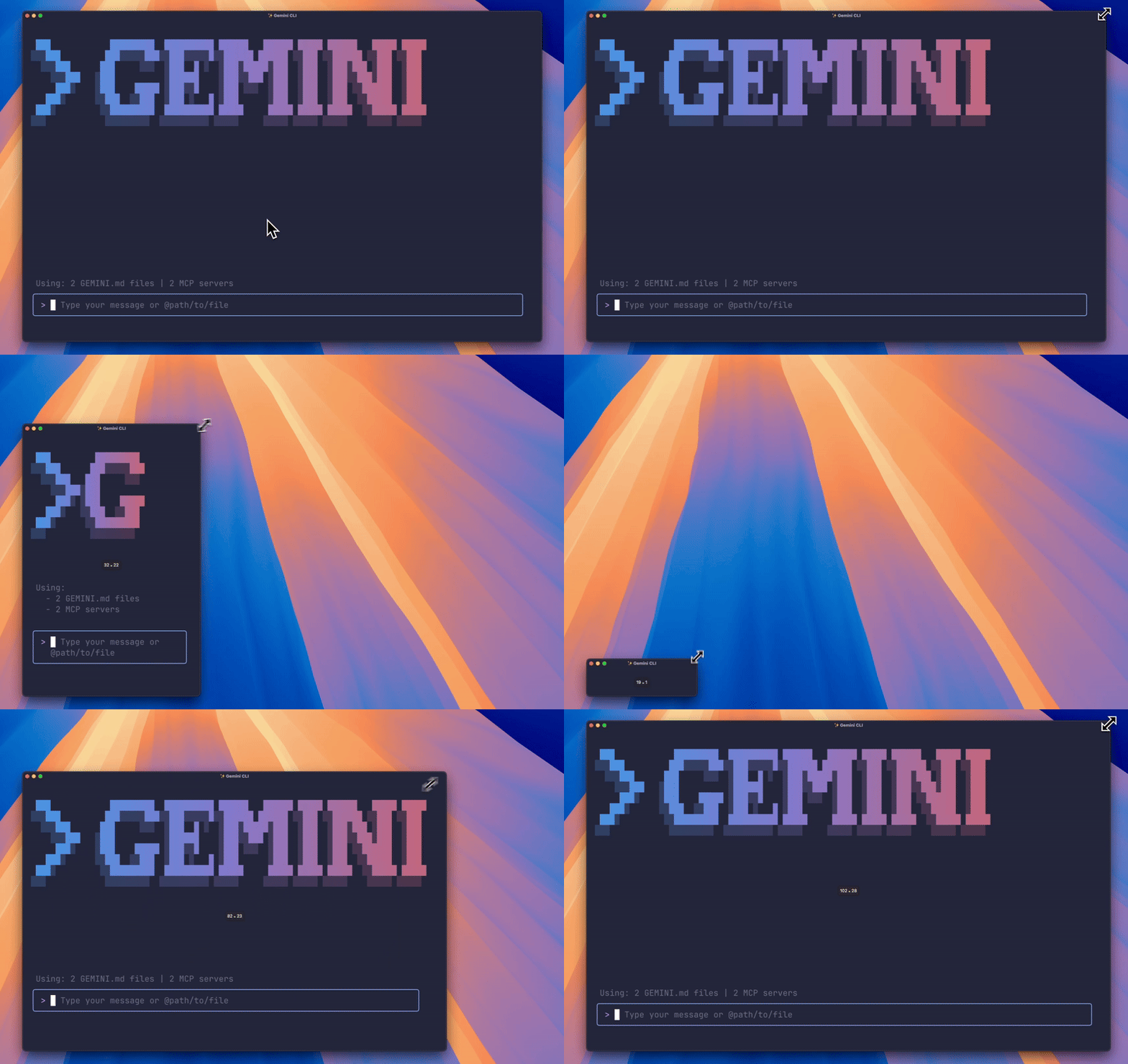
The main change powering the all-new Gemini CLI is a new rendering engine under the hood. This is what helps Google transition the underlying display pipeline away from the “visual noise" -- the flicker, prompt jumping, and layout shifts that happen when terminals try to mimic GUI behavior -- aiming for a stable frame that doesn’t jump when the model prints long responses or when the terminal window is resized.
Prompts now remain anchored, and resizing a window mid-session no longer causes scrambled panes or dropped lines. These stability improvements matter because Gemini CLI often runs multi-step tasks or code-generation sessions that rapidly fill the screen.
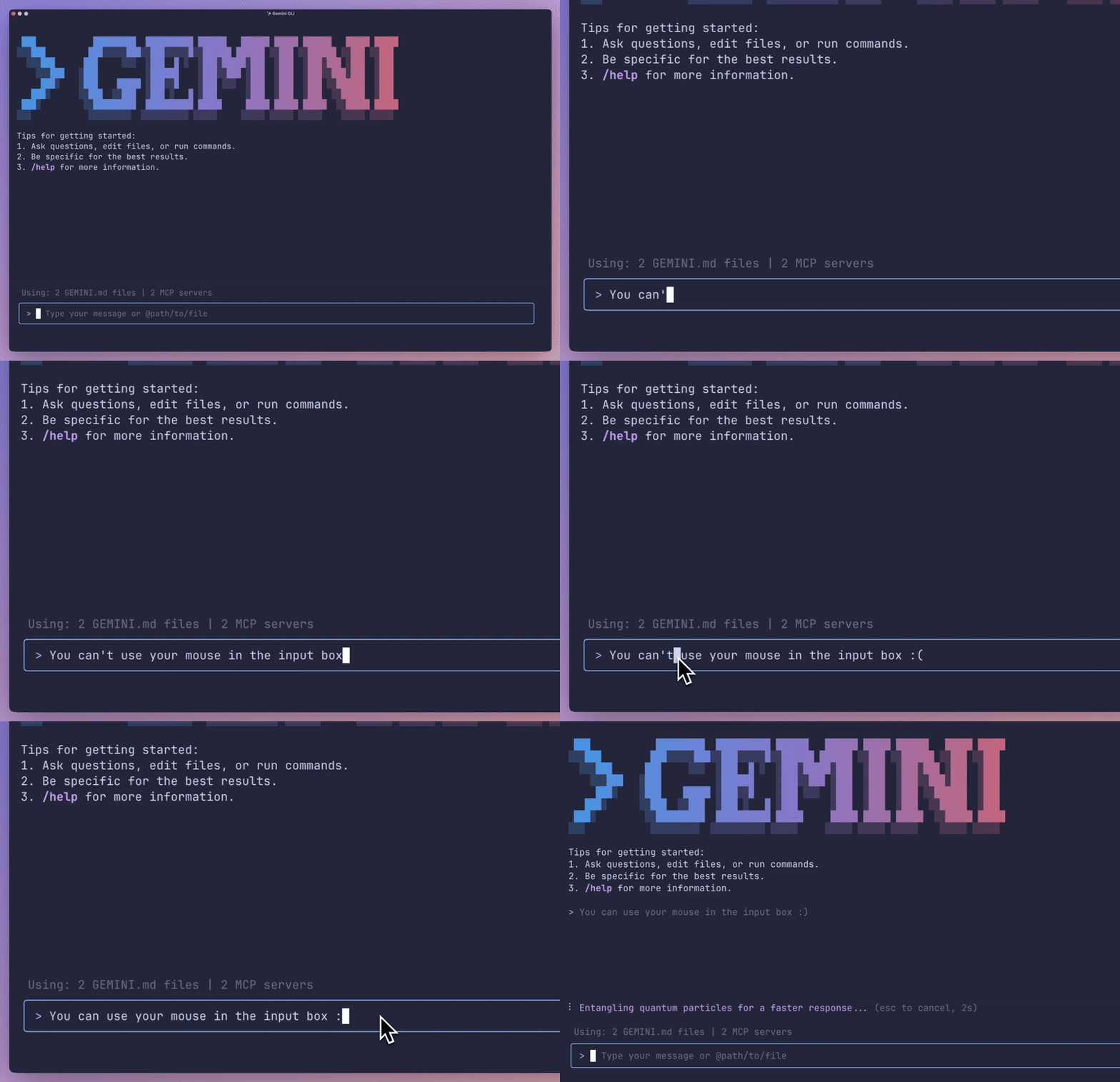
Mouse interaction is another key addition, with support for point-and-click cursor placement, something most terminal applications avoid because of cross-platform inconsistencies.
It’s optional, but useful for editing long commands without mashing arrow keys.
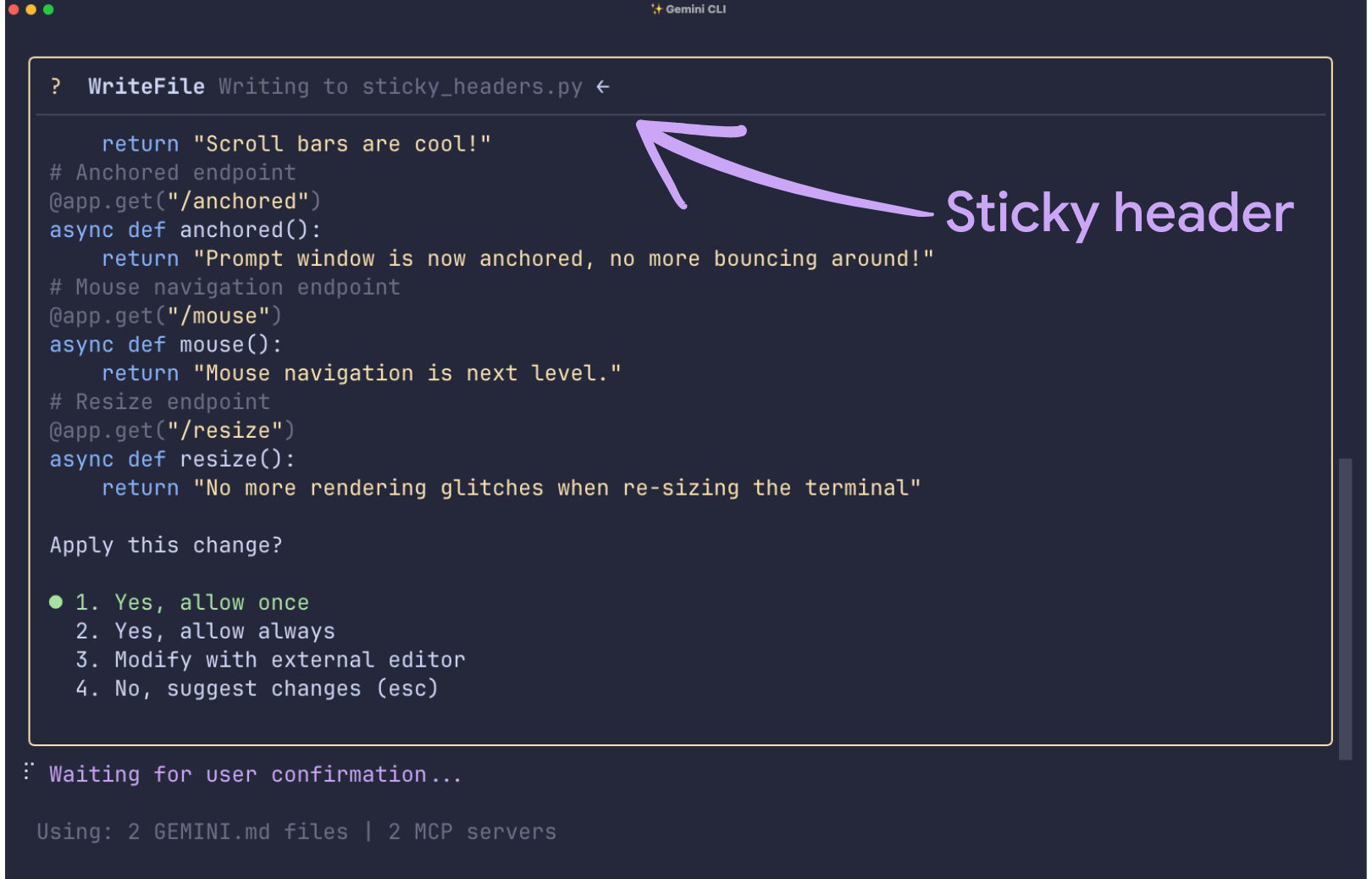
Layout stability is another recurring theme. Headers for confirmations or action summaries now stay “sticky” at the top of the pane, while the input prompt is locked to the bottom, making it easier to follow the flow of a session.
Users who rely on terminal scrollback won’t lose anything either — the alternate buffer used for rendering now restores the entire chat history after quitting.
These changes are purely interface-level improvements; the Gemini CLI still works the same under the hood, routing developer workflows to the model and executing commands as before.
Google’s move reflects a broader trend: as AI tools embed themselves deeper into development workflows, even the terminal — once the most spartan environment — now demands a degree of visual refinement. And there’s competition here. OpenAI is pushing its own CLI efforts, and smaller players like Charm are betting that developer delight in the command line matters as much as capability. Anthropic, meanwhile, adopted a CLI-first strategy with Claude Code, but is now expanding into full GUIs with web and mobile support — a sign that both paths matter.
With multiple companies treating the terminal as a front line in the AI-coding push, polish is clearly becoming a big part of the pitch.
Google, for its part, says that more Gemini CLI improvements are coming, including better navigation patterns and refinements to buffer management. For now, the update represents a quality-of-life upgrade aimed squarely at people who prefer to stay in the terminal, but would like the experience to feel less like a text display straight from the 1980s.
To try the updated interface, developers simply need the latest release of Gemini CLI. Google says the new rendering system is enabled by default from version 0.15.0 onward.
Updating is straightforward: run npm install \-g @google/gemini-cli@latest, and the CLI will pick up the new UI on the next launch.